
Faculty & Scientific Staff

Caitlyn Kwong
Lab Aide, Lacy-Hulbert Lab; Center for Systems Immunology


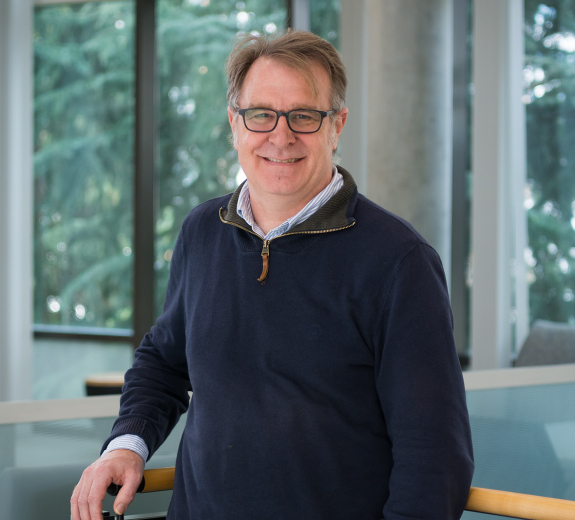
The Puget Sound Business Journal (PSBJ) is honoring Adam Lacy-Hulbert, PhD, for its 2024 Researcher of the Year Award, recognizing his work to better understand how immune system diseases begin and how to prevent them. Dr. Lacy-Hulbert’s team uses molecular and cell biology approaches to uncover how innate immune system cells and processes promote health.
As a fundamental immunologist, Dr. Lacy-Hulbert focuses on cells, molecules and other finite details in the immune system. However, Dr. Lacy-Hulbert also has a unique ability to zoom out, understand the big picture, and find ways to turn lab discoveries into life-changing care. In leading Benaroya Research Institute’s (BRI’s) Center for Systems Immunology, Dr. Lacy-Hulbert is bringing new, leading-edge technologies and more to BRI. This includes implementing data visualization tools to allow for easier identification of patterns and building creative teams that include experts from many fields — from bioinformatics to virtual reality — to fuel answers to pressing questions and new discoveries.
“It’s an honor to have PSBJ recognize the work we do here at BRI to predict, prevent, and cure autoimmune diseases,” says Dr. Lacy-Hulbert. “Research is a team effort, and our work would not be possible without many different people and organizations funding and supporting our mission.”
Recipients of PSBJ’s sixth annual Health Care Leadership Awards were recognized at an awards luncheon on Thursday, December 5, at Benaroya Hall in downtown Seattle.
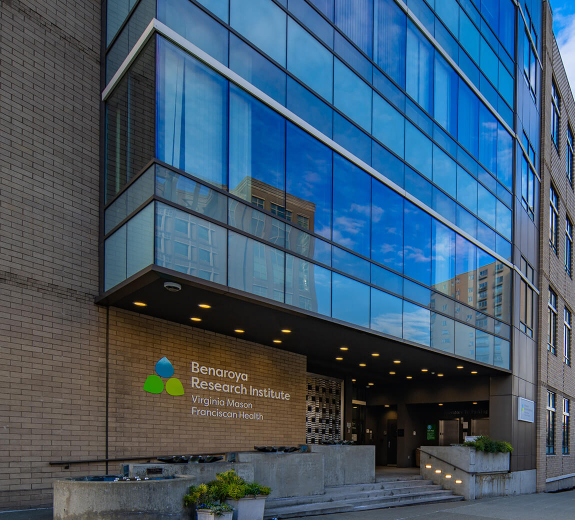
Benaroya Research Institute (BRI) is a world leader in human immune system research, working to advance the science that will predict, prevent, reverse and cure immune system diseases like allergies, asthma, cancer and autoimmune diseases.
BRI accelerates discovery through laboratory breakthroughs in immunology that are then translated to clinical therapies. We believe that a breakthrough in one immune system disease can lead to progress against them all, and work tirelessly toward our vision of a healthy immune system for everyone. BRI is an independent nonprofit research institute affiliated with Virginia Mason Franciscan Health and based in Seattle.
To learn more, visit benaroyaresearch.org and connect with us on Facebook, Instagram, Threads, LinkedIn, Bluesky and YouTube.
Today, Benaroya Research Institute (BRI) announced 11 research grants totaling more than $14 million awarded in the first two quarters of 2024, including a $4.1 million grant to demonstrate how IgA autoantibodies play a significant role in the development of systemic lupus erythematosus (SLE). Another $4.2 million grant supports the study of a newly discovered pathway that protects cells against outer membrane damage caused by bacterial toxins or our own immune responses, with both funded by the National Institutes of Health (NIH).
The first $4.1 million NIH grant (R01AI185925) is led by BRI scientist Jessica Hamerman, PhD. Her research team is focused on how certain previously understudied antibodies in lupus can increase immune cell activity, which leads to a stronger inflammatory response. While most earlier lupus research focused on a type of antibody called IgG, this study reviewed the role of IgA and offers promising new directions for treatments.
“Together, these results highlight a new mechanism by which IgA autoantibodies contribute to SLE pathogenesis,” said Dr. Hamerman. “We’re excited to investigate the possibility of new clinical approaches that utilize IgA, which might be a better diagnostic for lupus development than the currently used IgG. It’s also possible that IgA and its receptor will be good targets for therapeutic intervention.”
Led by Adam Lacy-Hulbert, PhD, the $4.2 million NIH grant (R01AI77971) supports work following up on results from a genetic screen to find genes that would allow a human cell line to survive after exposure to a toxin from the bacteria Staphylococcus aureus, known as “alpha-toxin.” The research team previously identified a gene called LITAF that, when switched on, helps cells repair damage in their surface membranes caused by bacterial toxins. This is the first time this gene and pathway have been shown to be involved in the process of cell membrane repair, opening new avenues for research into how cells protect themselves against autoimmune attack.
“What is exciting to us is that this LITAF-mediated pathway is different from other pathways of membrane repair that have been described recently,” said Dr. Lacy-Hulbert. “It is activated by different signals and occurs at a different place in the cell. We think that the body may be able to activate this pathway during infection or stress to increase its defenses.”
In addition to these awards, BRI team members received nine other grants supporting research examining regulation of intestinal immunity, dermal fibroblast gene programs, and more.
“The human immune system is complex, which requires studying it from multiple angles, perspectives and disease areas,” said Jane Buckner, MD, president of BRI. “Our efforts collectively show BRI’s capacity to predict, prevent, reverse and cure diseases of the immune system.”
Details of the nine additional grants awarded to BRI in the first two quarters of 2024 include:
Adam Lacy-Hulbert, PhD, $2,919,460
Dr. Lacy-Hulbert’s work will determine the effects of the blockade of alpha v beta 6 integrins in the intestinal epithelium by studying epithelial cell cultures and mouse models. His team will test the hypothesis that loss of alpha v beta 6-mediated activation of transforming growth factor beta causes pre-clinical ulcerative colitis.
Sponsor: National Institutes of Health (R01DK136071)
Peter Morawski, PhD, $476,575
Scleroderma is a disease of the connective tissue characterized by fibrosis of the skin and underlying organs. It has the highest mortality of all rheumatic conditions and no cure. This study will use single-cell spatial transcriptomics and innovative organotypic skin cultures to fill critical knowledge gaps in our current understanding of scleroderma and overcome existing technical hurdles in this field of research. Completion of this work will build a foundation for the generation of new hypotheses and advance a new organotypic culture model with the potential to reproduce in vivo fibroblast heterogeneity associated with tissue dysfunction in scleroderma.
Sponsor: National Institutes of Health (R21AI185642)
Jane Buckner, MD, $476,575
Relapsing-remitting multiple sclerosis (RRMS) is an autoimmune disease in which CD4 T cells play a central role. Studying the epigenome of CD4 T cells in RRMS through the integration of genome-wide analysis of DNA methylation, open chromatin and histone modifications with RNA-sequencing data and variants identified by genome-wide association studies has the potential to bring clarity to the molecular processes that increase RRMS disease activity. This work will also advance our understanding of how changes in chromatin accessibility in the context of disease activity contributes to T cell pathogenicity and may reveal drivers of disease development.
Coinvestigators Karen Cerosaletti, PhD, and Arpit Mishra, PhD, will support this project.
Sponsor: National Institutes of Health (R21AI183670)
Eddie James, PhD, $250,000
The goal of this project is to establish an improved strategy for beta-cell replacement therapy by examining key genes and pathways that are likely to compromise the fitness of replacement islet cells. Previous research has shown that specific enzymes promote autoimmune recognition of human islet cells in type 1 diabetes. This study will evaluate the activity of those enzymes and pathways in stem cells as they mature into replacement beta cells and test a gene-editing strategy to eliminate the negative effects of those pathways. Dr. James hypothesizes that stem cells engineered to lack expression of these stress-activated enzymes will have improved resilience, function, and ability to survive.
Sponsor: Breakthrough T1D (2-SRA-2024-1524-S-B)
John Ray, PhD, $389,817
This study will use massively parallel reporter assays, allele-specific assays, and an assay for transposase-accessible chromatin sequencing to identify inflammatory bowel disease (IBD)-associated genetic variants that alter cis-regulatory region activity in primary CD4 T cells from IBD patients. Dr. Ray’s lab will confirm the top five IBD risk variants in each assay by using CRISPR base editing of variant risk alleles in T cells from people both with and without IBD.
Sponsor: Crohn's and Colitis Foundation (1158945)
John Ray, PhD, $299,918
To determine systemic lupus erythematosus (SLE) genetic variants that alter cis-regulatory activity, this research will test thousands of SLE-associated variants using two high-throughput genomic approaches: massively parallel reporter assays and an allele-specific assay for transposase-accessible chromatin sequencing. These approaches will identify likely disease-causal variants and assess major regulators that are disrupted by these variants using transcription factor motif analysis. Dr. Ray’s lab will also validate the top five SLE risk variants in each assay using CRISPR base editing of variant risk alleles in B cells from people both with and without SLE.
Sponsor: Lupus Research Alliance
Estelle Bettelli, PhD, $726,000
Specific subsets of memory T cells have been identified in the central nervous systems (CNSs) of people living with multiple sclerosis (MS) and are suspected to contribute to disease progression. Primary goals of this study are to establish that these memory T cell subsets are harmful and determine how they cooperate with B cells. This will provide a better understanding as to if eliminating or removing specific subsets of memory T cells from the CNS will be beneficial for people living with MS.
Dr. Bettelli’s research team aims to provide a foundation for new MS treatments by identifying unique markers on memory T cells and determining how they establish their residence in the CNS.
Sponsor: National Multiple Sclerosis Society (RG-2307-42130)
Adam Lacy-Hulbert, PhD, and James Lord, MD, PhD, $250,000
The goal of this study is to determine the effects of alpha v beta 6 autoantibodies on human and mouse intestinal epithelial cells.
Sponsor: Kenneth Rainin Foundation (20240045)
Jessica Hamerman, PhD, $63,852
This opportunity will support BRI’s Susana Orozco, PhD, a postdoctoral researcher in the Hamerman Lab, in undertaking one year of skill training in computational science. Hannah DeBerg, PhD, manager of BRI’s Bioinformatics Group, and Dr. Hamerman will provide mentorship to Dr. Orozco.
Throughout the course of the fellowship, Dr. Orozco and her mentors will conduct a research study utilizing single-cell RNA sequencing to capture different developmental states of monocytes that have been exposed to inflammation. Using mouse models, their team aims to understand how these monocytes differentiate into various inflammatory cells, and how the location of the monocytes affects their differentiation.
Sponsor: American Association of Immunologists
Benaroya Research Institute (BRI) is a world leader in human immune system research, working to advance the science that will predict, prevent, reverse and cure immune system diseases like allergies, asthma, cancer and autoimmune diseases.
BRI accelerates discovery through laboratory breakthroughs in immunology that are then translated to clinical therapies. We believe that a breakthrough in one immune system disease can lead to progress against them all, and work tirelessly toward our vision of a healthy immune system for everyone. BRI is an independent nonprofit research institute affiliated with Virginia Mason Franciscan Health and based in Seattle.
To learn more, visit benaroyaresearch.org and connect with us on Facebook, Instagram, Threads, LinkedIn, Bluesky and YouTube.

Today, Benaroya Research Institute (BRI) announced its reception of four grants totaling more than $5 million awarded in late 2023, including a $4,146,476 award to study how regulatory T cells (Tregs) prevent the immune system from overreacting to harmless substances and reacting to the body’s own cells, which occurs in people living with autoimmune disease.
The five-year grant, titled “Regulatory T Cells Maintain Immune Homeostasis Through Translation Control,” is led by BRI’s Steven Ziegler, PhD, and Jane Buckner, MD, as well as Ram Savan, PhD, of the University of Washington. The team will investigate how Tregs suppress protein synthesis, which prevents cell division and ultimately shuts down T cells that promote inflammation. They are also seeking to identify if this process is disrupted in people living with autoimmune disease by studying immune cells isolated from people with type 1 diabetes and multiple sclerosis. Ultimately, the group aims to further the understanding of how Tregs function and how this function is altered in the context of autoimmune disease. The grant is sponsored by the National Institutes of Health — National Institute of Allergy and Infectious Diseases (R01AI181275).
In addition to this award, BRI team members received three other grants supporting research into inflammatory bowel disease, multiple sclerosis and type 1 diabetes:
Adam Lacy-Hulbert, PhD, and James Lord, MD, PhD
$450,580
Vedolizumab, an anti-integrin α4β7 therapy, has been effective and safe for managing inflammatory bowel disease (IBD), including Crohn’s disease and ulcerative colitis — relatively common, chronic and incurable immune-mediated diseases of the intestines. However, for unknown reasons, many IBD patients do not respond to this therapy. Recent research suggests that this medication influences a type of immune cell in the gut called dendritic cells (DCs), rather than T cells, as had been widely suspected. By studying these DCs more closely, especially how they react to vedolizumab, BRI aims to better predict who will benefit from this treatment and optimize the efficacy of this therapy. The team will perform a detailed analysis of DCs from IBD patients’ blood and colonic mucosa to assess for the presence or absence of inflammation and, more specifically, how vedolizumab induces remission in IBD.
Sponsor: National Institutes of Health — National Institute of Allergy and Infectious Diseases (R21AI176365)
Estelle Bettelli, PhD
$450,580
Multiple sclerosis (MS) is a disease characterized by inflammation, demyelination and neurodegeneration of the central nervous system (CNS). CD4+ T cells are important actors in the development and progression of CNS-specific autoimmunity. IL-2 is a cytokine critical for maintaining T cell homeostasis, growth and proliferation, and is predominantly produced by activated CD4+ T cells in lymphoid organs like bone marrow, lymph nodes and tonsils. In people with MS, however, IL-2 production is only sustained in a fraction of CD4+ T cells.
Scientists at BRI have developed a new tool which will allow researchers to track, eliminate and study IL-2+ T cells during the development and progression of experimental autoimmune encephalomyelitis (EAE), a scientific model used to study MS. The research team seeks to better understand how IL-2+ T cells evolve throughout EAE development and progression as well as establish whether the STAT1 gene limits IL-2+ T cells and how it may contribute to the development of MS.
Sponsor: National Institutes of Health — National Institute of Allergy and Infectious Diseases (R21AI176366)
Karen Cerosaletti, PhD
$299,997
Islet-autoreactive CD4 and CD8 T cells mediate pancreatic β cell destruction and are detected prior to and following type 1 diabetes (T1D) diagnosis in relation to disease progression, pointing to the importance of monitoring islet-specific T cells. A broadly applicable method to monitor islet-specific T cells in T1D is needed to assess treatment response and enable mechanistic studies. An activation-induced marker (AIM) assay has been recently developed for detection of islet-specific T cells in T1D. This multi-investigator international project is being led by the research team at BRI with the goals of optimizing AIM assay testing conditions and performing a multi-laboratory validation of the usage of an islet-specific AIM assay in T1D for future applications.
Sponsor: JDRF (2-SRA-2024-1478-S-B)
Benaroya Research Institute (BRI) is a world leader in human immune system research, working to advance the science that will predict, prevent, reverse and cure immune system diseases like allergies, asthma, cancer and autoimmune diseases.
BRI accelerates discovery through laboratory breakthroughs in immunology that are then translated to clinical therapies. We believe that a breakthrough in one immune system disease can lead to progress against them all, and work tirelessly toward our vision of a healthy immune system for everyone. BRI is an independent nonprofit research institute affiliated with Virginia Mason Franciscan Health and based in Seattle.
To learn more, visit benaroyaresearch.org and connect with us on Facebook, Instagram, Threads, LinkedIn, Bluesky and YouTube.

In an article published today in Science Immunology, researchers from Benaroya Research Institute (BRI) and the University of Washington found a new pathway that protects our cells against damage to their outer membranes caused by bacterial toxins or our own immune responses. The research team, led by Drs. Adam Lacy-Hulbert, Lynda Stuart and Caroline Stefani, conducted a genetic screen to find genes that would allow a human cell line to survive after exposure to a toxin from the bacteria Staphylococcus aureus, known as “alpha-toxin.” The research team found a gene called LITAF that, when switched on, helps cells repair damage in their surface membranes caused by bacterial toxins. This is the first time this gene and pathway have been shown to be involved in the process of cell membrane repair.
Pore-forming toxins are released by bacteria and are able to punch tiny holes in the surface membranes of our cells. These pores cause leakage of cell contents, impairing cell functions and triggering cell death, allowing the bacteria to enter the body and evade the immune system. Our cells have evolved complex mechanisms to fight these toxins, including ways to quickly repair and replace damaged membranes. However, how these repair mechanisms are activated in response to damage, and why some cells or individuals are better at repair and resisting toxin damage than others has remained poorly understood until now.
The BRI team found that when cells sense the leakage of certain components through pores, they use LITAF to turn on a very effective repair mechanism, which quickly “packages” the damaged membranes and expels it before the cell is forced to die. Notably, the immune system also uses pore-forming proteins to kill our own cells when they are infected or causing cancer, and this same LITAF pathway protects against this immune killing as well.
"Cellular stress and damage are direct effects of the immune response and can lead to the loss of essential cells, like pancreatic beta cells in type 1 diabetes or neurons in neurodegenerative diseases like multiple sclerosis,” noted Dr. Stefani. “Finding this gene that can boost repair and limit cell death could lead to new therapeutic approaches to protect our healthy cells and limit immune disease progression. It could also have implications in increasing the killing of harmful cells by the immune system, like in the case of infected cells or cancer cells.”
“What is exciting to us is that this LITAF-mediated pathway is different from other pathways of membrane repair that have been described recently,” added Dr. Lacy-Hulbert. “It is activated by different signals and occurs at a different place in the cell. We think that the body may be able to activate this pathway during infection or stress to increase its defenses.”
The BRI team plans to extend their studies of LITAF and other genes identified in their screen to better understand how cells respond to damage caused by infection and immune attack and find ways to harness these responses to combat inflammation and autoimmunity.
Benaroya Research Institute (BRI) is a world leader in human immune system research, working to advance the science that will predict, prevent, reverse and cure immune system diseases like allergies, asthma, cancer and autoimmune diseases.
BRI accelerates discovery through laboratory breakthroughs in immunology that are then translated to clinical therapies. We believe that a breakthrough in one immune system disease can lead to progress against them all, and work tirelessly toward our vision of a healthy immune system for everyone. BRI is an independent nonprofit research institute affiliated with Virginia Mason Franciscan Health and based in Seattle.
To learn more, visit benaroyaresearch.org and connect with us on Facebook, Instagram, Threads, LinkedIn, Bluesky and YouTube.