Cancer

Learn more about cancer

Cancer: Disease Overview

Nearly 1.8 million Americans will learn that they have cancer this year. There are more than 200 forms of this often devastating disease, which are characterized by the uncontrolled and destructive growth of cells. Cancer is currently the second leading cause of death in the United States, and BRI is committed to finding out what causes it and how to better treat and prevent it.

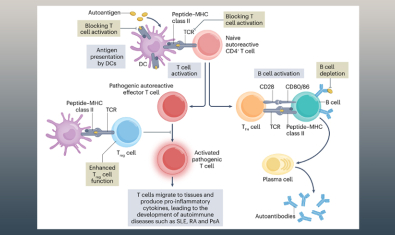
Laboratory scientists are investigating the connections between autoimmune diseases and the mechanisms that help cancer grow and spread without being detected by the immune system. Clinical trials are studying cancer from a variety of angles, including prevention and treatment.

What Is Cancer?

Cancer is an umbrella term for a variety of diseases in which abnormal cells divide uncontrollably. These cells can invade nearby tissues and also spread to other parts of the body through the blood and lymph systems (known as metastasizing). Cancer can affect just about any part of the body. Biomedical advances over the past 50 years have vastly improved the treatments and outcomes for people facing cancer.

What Causes Cancer?

Cancer is caused by changes to genes that control the way cells function, especially the way they grow and divide. Usually, the immune system eliminates cells with damaged DNA. In the case of cancer, the immune system fails to recognize the cancerous cells and they can grow uncontrolled within the body.

What Are Risk Factors for Cancer?

Scientists still don’t know why one person develops cancer and another does not. However, research has shown that certain factors can increase a person’s chances of developing cancer.

  • Age – Older people are more likely to develop cancer.
  • Health habits – Smoking, drinking alcohol, obesity, excessive exposure to the sun and unsafe sex can all increase the chance of developing cancer.
  • Family history – Though cancer is not passed down from one generation to the next, gene mutations that increase the risk of cancer can be. Not everyone who has a specific gene mutation will develop cancer. 
  • Health conditions – Some chronic conditions, such as ulcerative colitis, can increase the risk of cancer.
  • Environmental exposures – Exposure to harmful chemicals, such as secondhand smoke, asbestos, benzene, etc., can increase the risk of cancer. 

What Is the Latest Research Into Cancer?

BRI is a leader in understanding the interaction between immune system function and the development of cancer. Our current research includes:

  • Unraveling how cancer cells stop the immune system from recognizing tumors as dangerous.
  • Pinpointing the links between cancer and autoimmunity.
  • Using artificial intelligence (AI) and data analytics to identify new targets for treatment.
  • Understanding the cells and processes that allow cancer to advance.

Clinical Research Studies in Cancer

We have ongoing clinical research studies in several areas of cancer research. Studies labeled as “Enrolling” are actively accepting new participants while studies labeled as “Closed to Enrollment” are still active but no longer seeking new participants.


Please email Cancer Clinical Research or call (206) 287-6270 for more information.


Cancer Non-Specific

A Phase 1/2a, Open-Label Study of VS-7375, a KRAS G12D (ON/OFF) Inhibitor, as Monotherapy and in Combination, in Patients with Advanced KRAS G12D-Mutated Solid Tumors (VS-7375-101)
Principal Investigator: Vincent Picozzi, MD
Status: Enrolling


Virginia Mason Medical Center and Benaroya Research Institute Tumor Tissue Repository (VM-BRITE) Sample Collection Protocol
Principal Investigator: Christopher Gault, MD 
Status: Enrolling


Colorectal Cancer

FHCC: A pilot trial to evaluate the effectiveness of navigation, interactive web education, or the combination of both to promote guideline-concordant colorectal cancer surveillance care
Principal Investigator: Val Simianu, MD
Status: Enrolling

HAI Consortium Research Network: Registry of Hepatic Arterial Infusion (HAI)
Principal Investigator: Lauren Wancata, MD
Status: Enrolling

Neo RT: A PHASE 3 RANDOMIZED TRIAL OF NEOADJUVANT CHEMOTHERAPY, EXCISION AND OBSERVATION VERSUS CHEMORADIOTHERAPY FOR EARLY RECTAL CANCER
Principal Investigator: Val Simianu, MD
Status: Enrolling

NRG-GI008: COLON ADJUVANT CHEMOTHERAPY BASED ON EVALUATION OF RESIDUAL DISEASE (CIRCULATE-NORTH AMERICA)
Principal Investigator: Huong Pham, MD
Status: Enrolling


The Janus Rectal Cancer Trial: A Randomized Phase II/III Trial Testing the Efficacy of Triplet Versus Doublet Chemotherapy Regarding Clinical Complete Response and Disease-free Survival in Patients with Locally Advanced Rectal Cancer
Principal Investigator: Val Simianu, MD
Status: Closed to Enrollment

ATOMIC: Randomized trial of standard chemotherapy alone or combined with Atezolizumab as adjuvant therapy for patients with Stage III colon cancer and deficient DNA mismatch repair.
Principal Investigator: Bruce Lin, MD
Status: Closed to Enrollment

SWOG 0820: A Double Blind Placebo-Controlled Trial of Eflornithine and Sulindac to Prevent Recurrence of High Risk Adenomas and Second Primary Colorectal Cancers in Patients with Stage 0-III Colon or Rectal Cancer, Phase III –Preventing Adenomas of the Colon with Eflornithine and Sulindac (PACES)
Principal Investigator: Bruce Lin, MD
Status: Closed to Enrollment


Pancreatic Cancer

Astellas 2138: A Phase 1/1b Study of ASP2138 in Participants with Metastatic or Locally Advanced Unresectable Gastric or Gastroesophageal Junction (GEJ) Adenocarcinoma or Metastatic Pancreatic Adenocarcinoma Whose Tumors Have Claudin (CLDN) 18.2 Expression
Principal Investigator: Vincent Picozzi, MD
Status: Enrolling

Pfizer River: A Phase 2b/3, Randomized, Double-Blind Study to Investigate the Efficacy, Safety, and Tolerability of Ponsegromab (PF-06946860) Compared with Placebo both with Background First-Line Chemotherapy in Adult Participants with Cachexia and Metastatic Pancreatic Ductal Adenocarcinoma
Principal Investigator: Vincent Picozzi, MD
Status: Enrolling

Astellas 3082: A Phase 3, Double-blind, Placebo-controlled, Randomized Study to Assess the Efficacy and Safety of ASP3082 in Combination with mFOLFIRINOX or NALIRIFOX as First-line Treatment in Participants with KRAS G12D-mutated Metastatic Pancreatic AdenocarcinomaAstellas 3082: A Phase 3, Double-blind, Placebo-controlled, Randomized Study to Assess the Efficacy and Safety of ASP3082 in Combination with mFOLFIRINOX or NALIRIFOX as First-line Treatment in Participants with KRAS G12D-mutated Metastatic Pancreatic Adenocarcinoma
Principal Investigator: Vincent Picozzi, MD
Status: Enrolling

A Phase Ib Dose Escalation/Dose Expansion Study of PTM-101 as an Adjunct to Neoadjuvant Therapy for Treatment Naïve, Borderline Resectable and Locally Advanced Pancreatic Ductal Adenocarcinoma (PDAC)
Principal Investigator: Vincent Picozzi, MD
Status: Enrollinghttps://clinicaltrials.gov/ct2/show/NCT06989437

A Phase 1 Open-label Study to Assess the Safety and Tolerability of Zolbetuximab (IMAB362) in Combination with Chemotherapy (mFOLFIRINOX) in Participants with CLDN18.2 Positive Metastatic Pancreatic Adenocarcinoma
Principal Investigator: Vincent Picozzi, MD
Status: Enrolling

A Phase 1b Study to Evaluate the Safety, Tolerability and Preliminary Efficacy of ATP150/ATP152, VSV-GP154 and Ezabenlimab (BI 754091) in Patients with KRAS G12D/G12V Mutated Pancreatic Ductal Adenocarcinoma
Principal Investigator: Vincent Picozzi, MD
Status: Enrolling


Analysis of Health Outcome of Pancreatic Enzyme Replacement Therapy in Unresectable Pancreatic Cancer
Principal Investigator: Vincent Picozzi, MD
Status: Enrolling


A Randomized, Placebo-Controlled, Double-Blind, Multicenter Phase 3 Trial of Quemliclustat and Chemotherapy Versus Placebo and Chemotherapy in Patients With Treatment-Naive Metastatic Pancreatic Ductal Adenocarcinoma
Principal Investigator: Vincent Picozzi, MD
Status: Closed to Enrollment

A Phase 1b/2a Study of Gemcitabine and Nab-paclitaxel in Combination with Avutometinib (VS-6766) and Defactinib in Patients with Previously Untreated Metastatic Adenocarcinoma of the Pancreas
Principal Investigator: Vincent Picozzi, MD
Status: Closed to Enrollment

A Phase 2, Randomized, Open-Label, Controlled Study to Evaluate the Efficacy and Safety of Ampligen® Compared to Control Group / No Treatment Following FOLFIRINOX in Subjects with Locally Advanced Pancreatic Adenocarcinoma
Principal Investigator: Vincent Picozzi, MD
Status: Closed to Enrollment

A Phase 2, Open-Label, Randomized Study to Assess the Efficacy and Safety of Zolbetuximab (IMAB362) in Combination with Nab-Paclitaxel and Gemcitabine (Nab P + GEM) as First Line Treatment in Subjects with Claudin 18.2 (CLDN18.2) Positive, Metastatic Pancreatic Adenocarcinoma
Principal Investigator: Vincent Picozzi, MD
Status: Closed to Enrollment

A Phase I/II Study of MCLA-128, a full length IgG1 Bispecific Antibody Targeting HER2 and HER3, in Patients with Solid Tumors
Principal Investigator: Vincent Picozzi, MD
Status: Enrolling

VM-BRI repository for early detection of pancreas cancer (VM-BRIDPAN)
Principal Investigator: Margaret Mandelson, PhD
Status: Closed to Enrollment

Alternating neoadjuvant Gemcitabine-Nab-Paclitaxel and nal-IRI with 5-Fluorouracil and folinic acid (Leucovorin) regimens in resectable and borderline resectable pancreatic cancer, A Pilot Study
Principal Investigator: Vincent Picozzi, MD
Status: Closed to Enrollment


Are you living with cancer?

Support cancer research at BRI by participating in our cancer biorepository.

Immuno-what? Hear the latest from BRI

Keep up to date on our latest research, new clinical trials and exciting publications.