Autoantibodies: The first stage in T1D
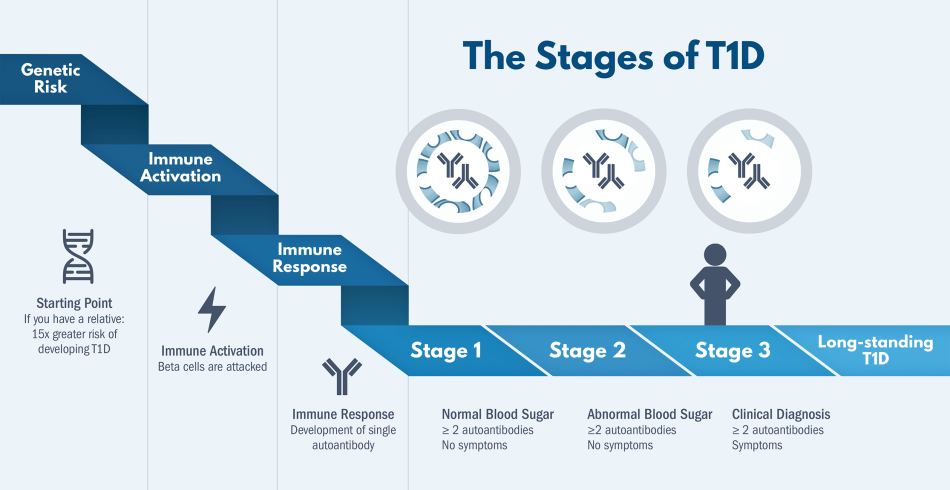
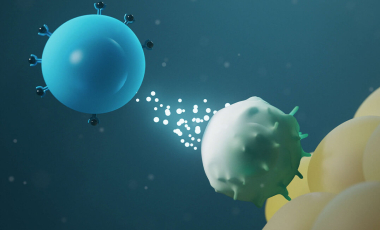
Decades of research at BRI and other institutions has mapped out three key stages on the path to developing T1D. The first stage happens when a person develops proteins called autoantibodies. Once someone has at least two autoantibodies, it becomes a question of when, not if, they will develop T1D.
Several autoantibodies contribute to the progression of T1D, and Dr. James is studying one of the most common ones called GAD. He’ll focus on people who transition from Stage 0 to Stage 1 T1D, comparing what they see in people who develop the GAD autoantibody compared to those who don’t.
“Other studies have taken snapshots during specific moments in this process, but our study will go beyond that by tracking how disease-related T cells change before and after autoantibodies appear,” Dr. James said.
Second generation tetramers
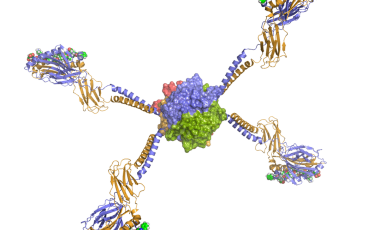
Like using a magnet to find a needle in a haystack, tetramers enable scientists to find and isolate very rare cells. BRI’s Bill Kwok, PhD, pioneered the first generation of this tool in the early 1990s, and tetramers been at the heart of many game-changing discoveries ever since.
In spring 2026, Dr. Kwok launched new second generation tetramers, which work like an even stronger magnet. They help scientists identify greater numbers of disease-causing cells, including those that were previously difficult to detect.
“Bill’s new iteration of tetramers gives us about 10 times as many cells to study, and it’s what makes this research possible,” Dr. James said. “Plus, many of our research participants are kids from whom we can only take small blood draws. So now we can extract even more information from just a small blood sample.”
Cell programs linked to autoimmunity
Once the research team has fished out self-reactive T cells using the second generation tetramers, they’ll use a tool called single-cell RNA sequencing to see what’s happening inside those cells. Dr. James likens it to pulling up the control panel on your computer and seeing all the programs running (say an internet browser, a music player and a notes app).
Like computers, cells run programs too, and some of those programs are linked to autoimmunity. Dr. James’ hypothesis is that once an autoantibody is present, T cells start running more disease-related programs. If that’s true, it could open the door to a therapy that kills those cells or turns off the disease-related programs.
“Right now, we have one therapy that can delay the onset of T1D by a few years, and that’s great,” Dr. James said. “We hope this research leads to treatments that slow the disease for longer — or prevent it altogether."