
Protein and Tetramer Core
The BRI Protein and Tetramer Core was founded in 2001 to produce and distribute HLA proteins and tetramers for use in both scholarly and commercial research. Our reagents enable scientists to detect, characterize and isolate epitope specific T cells and investigate their role in a broad range of disease settings, including vaccination and infectious disease, allergy and asthma, and human autoimmune disease. Through large-scale epitope discovery contracts awarded by NIAID, the tetramer core has developed an array of HLA class II proteins, now covering ~30 different human HLA class II alleles. The core later expanded its operations to produce functional grade antibodies and other custom proteins. BRI first developed HLA class II tetramers in 1999 and we continue to operate as key leaders in the field by pioneering new applications for tetramer reagents. Because we produce "empty" HLA class II proteins that can be exogenously loaded with peptides, we are able to produce custom tetramers on demand to meet the needs of our customers. We look forward to offering our specialized expertise and extensive catalogue of proteins to assist you with your projects.
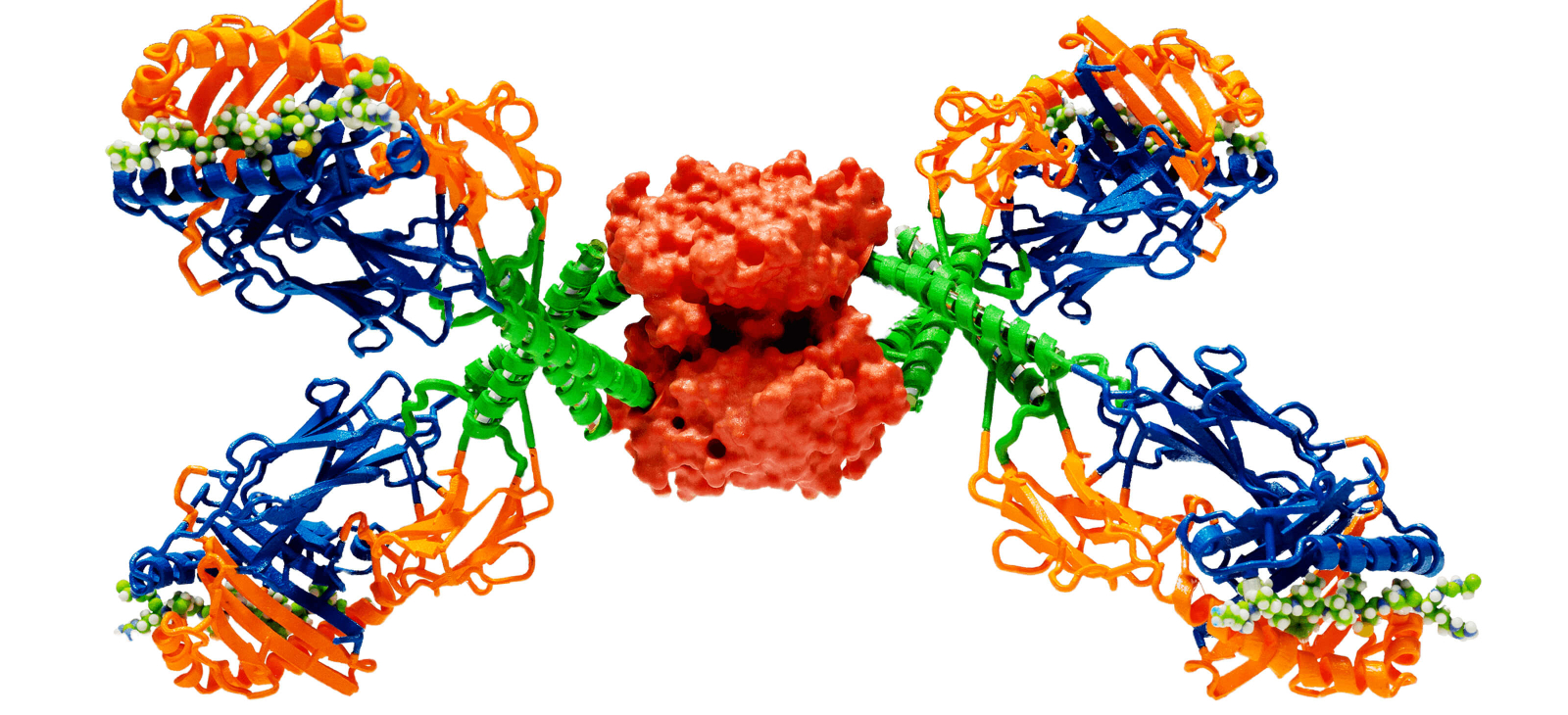
Advance Your Science with BRI
BRI’s Protein and Tetramer Core provides specialized reagents and expertise to advance the study of human T cell responses, building on foundational innovations in HLA class II tetramer development. From customizable tetramers and functional antibodies to peptide binding assays and rapid epitope discovery, our team offers integrated capabilities to support immunology research across disease areas. Whether you need ready-to-use reagents or a collaborative partner, we’re here to help accelerate your work — order from us or connect with our team to explore partnership opportunities.
- Monomers & Tetramers
Bill Kwok, the founding director of the BRI Protein and Tetramer Core was the first investigator to report the development of an HLA class II tetramer. The core now offers a broad array of HLA-DR, HLA-DP, and HLA-DQ reagents to facilitate the study of human CD4+ T cell responses. Each HLA class II protein is produced "empty" and can be exogenously loaded with peptides, allowing rapid production of custom tetramers.
- Antibodies
We produce functional grade antibodies (Anti-DR, anti-DQ, anti-DQ, and anti-HLA-A,B,C) and distribute these for use in in vitro assays or to facilitate the isolation of HLA/peptide complexes for peptidomics experiments. We can arrange to produce other antibodies upon request
- Peptide Binding Assays
Because the HLA class II proteins we produce are “empty” these monomers can be used in competition assays to measure the binding of putative epitopes to HLA class II proteins.
- Rapid Epitope Discovery
Leveraging the workflows we developed through multiple NIAID large-scale epitope discovery contracts (bioinformatic predictions, peptide binding verification, in vitro immunogenicity mapping, and T cell cloning) we are positioned to define HLA-restricted epitopes for high interest antigens across a wide range of disease areas.

Coming Soon!
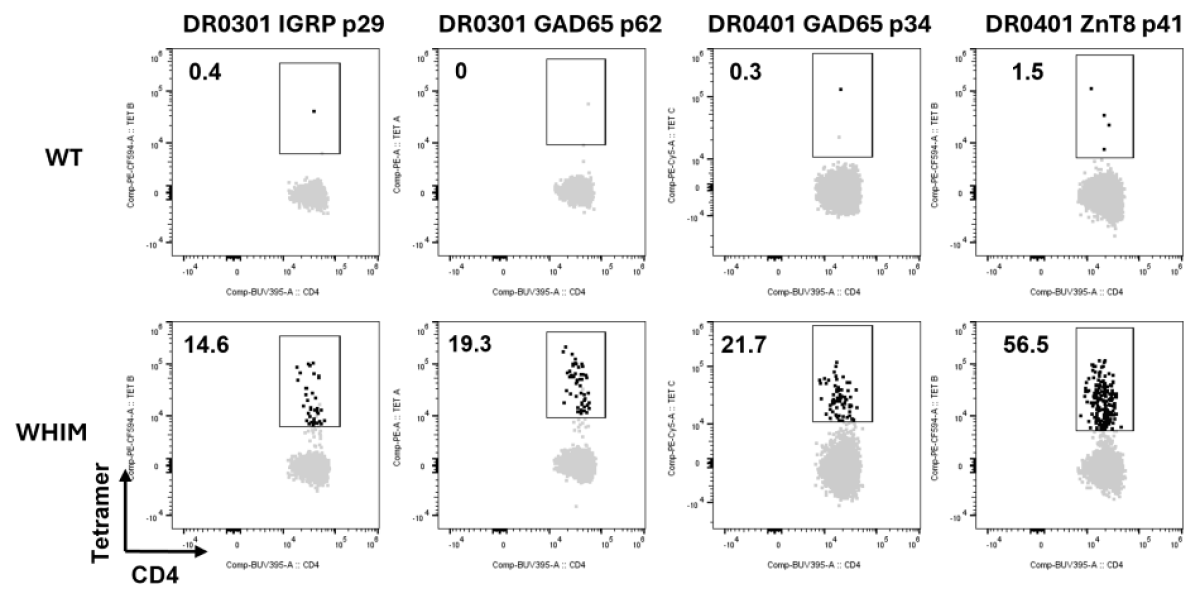
Second Generation Tetramers: building on pioneering work published by Sugata et al (Nat Biotechnol 2021), the BRI Protein and Tetramer Core is poised to announce the release of new second generation HLA class II tetramer reagents (findings to be presented at the 2026 Immunology of Diabetes Society Congress in Brisbane). These new reagents are engineered to have improved interactions with human CD4, enabling them to stain antigen specific T cells with either high or low affinities. Using these reagents, we have observed a 20 to 50-fold increase in our ability to detect autoreactive T cells.
Tetramer Core Lab Team

Briana Hall

Eddie James, PhD

Alexandra Johansson
Featured Publications
-
Antigen-specific T-cell frequency and phenotype mirrors disease activity in DRB1*04:04+ rheumatoid arthritis patients.
Clinical and Experimental ImmunologyRims C, Uchtenhagen H, Brooks K, Ng B, Posso SE, Carlin J, Kwok WW, Buckner JH, James EA -
T cell and autoantibody recognition of nucleus-associated islet autoantigens in individuals with type 1 diabetes.
DiabetologiaGuyer P, Seminova K, Lugar M, Manganaro A, Velarde de la Cruz EE, Hartley R, Smithmyer ME, Speake C, Bonifacio E, Kent SC, James EA -
CD4+ T cells from individuals with type 1 diabetes respond to a novel class of deamidated peptides formed in pancreatic islets.
DiabetesCallebaut A, Guyer P, Derua R, Buitinga M, Manganaro A, Yi X, Sodré FMC, Vig S, Suleiman M, Marchetti P, Eizirik DL, Kent SC, Mathieu C, James EA, Overbergh L -
Multifaceted immune dysregulation characterizes individuals at-risk for rheumatoid arthritis.
Nature CommunicationsJames EA, Holers VM, Iyer R, Prideaux EB, Rao NL, Rims C, Muir VS, Posso SE, Bloom MS, Zia A, Elliott SE, Adamska JZ, Ai R, Brewer RC, Seifert JA, Moss L, Barzideh S, Demoruelle MK, Striebich CC, Okamoto Y, Sainbayar E, Crook AA, Peterson RA, Vanderlinden LA, Wang W, Boyle DL, Robinson WH, Buckner JH, Firestein GS, Deane KD -
Recognition of mRNA Splice Variant and Secretory Granule Epitopes by CD4+ T Cells in Type 1 Diabetes.
DiabetesGuyer P, Arribas-Layton D, Manganaro A, Speake C, Lord S, Eizirik DL, Kent SC, Mallone R, James EA
BRI External Core Labs
BRI’s core laboratories are home to some of the most advanced scientific technologies available. These tools fuel breakthroughs in the lab and lead to advances in patient care. All BRI scientists, as well as scientists from outside of BRI, can access our core labs. Each lab is led by a field-expert who is available to support scientists as they leverage these tools and technologies.