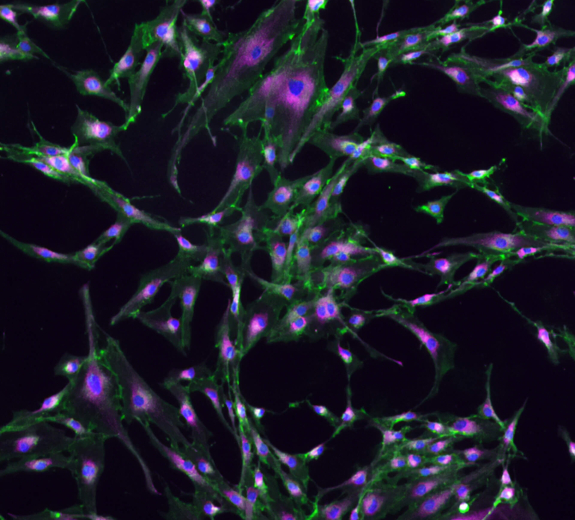
Purple shows the cell's mitochondria, green colors the cell membranes, and blue is the nucleus. Imaged by Mitch Fahning.

Innovation Fund Spotlight: New Tool Enables Scientists to Collect More Data From Rare Cells

Image
Inline TEAseq Fibroblast Morawski Mishra EDITORIAL

Scientists know that cells of the immune system attack healthy tissue in autoimmune disease. But they don’t know exactly when those cells go awry, what drives them toward disease or if that process can be slowed or stopped to prevent disease. BRI has been instrumental in research that led to the first medicine to delay the onset of type 1 diabetes. Now, our scientists are building on that work and exploring early intervention in other autoimmune diseases.

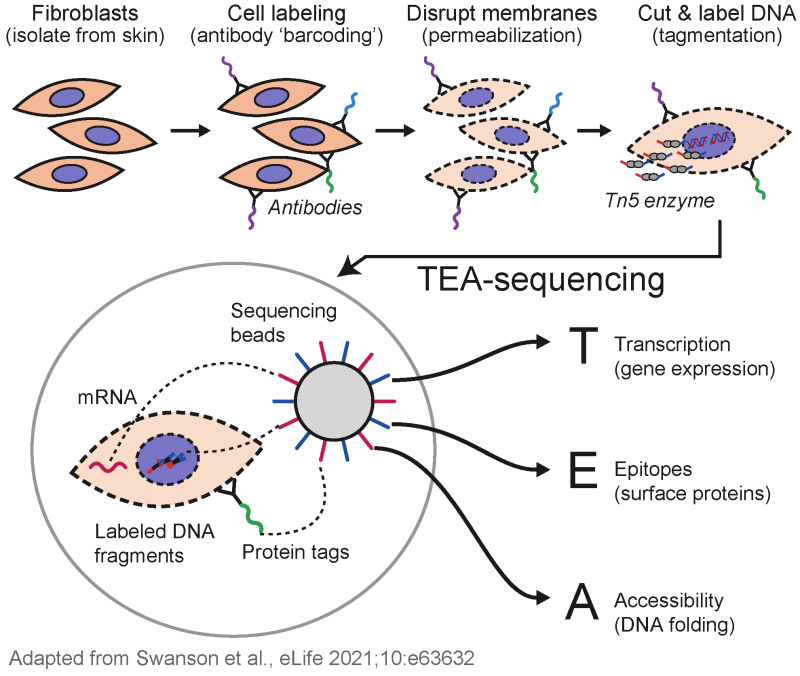
With a new Innovation Fund grant, Peter Morawski, PhD, and Arpit Mishra, PhD, are bringing a tool to BRI that could help them answer those questions. This tool, ISSAAC-seq, enables them to collect different types of data from the same cells — and learn things like what cells are currently doing and what they are primed to do in the future.

“Existing tools can do this, but they’re expensive and built for thousands of cells,” Dr. Mishra said. “We often study very rare populations, sometimes just 50 or 100 cells. With conventional methods, working with so few cells makes the chemistry hard to control, and the data gets noisy. ISSAAC-seq gets around that, and at a fraction of the cost.”

Their initial experiment will use ISSAAC-seq to study scleroderma, an autoimmune disease that affects the skin and other organs. We asked them about their project and how they’ll use this tool.

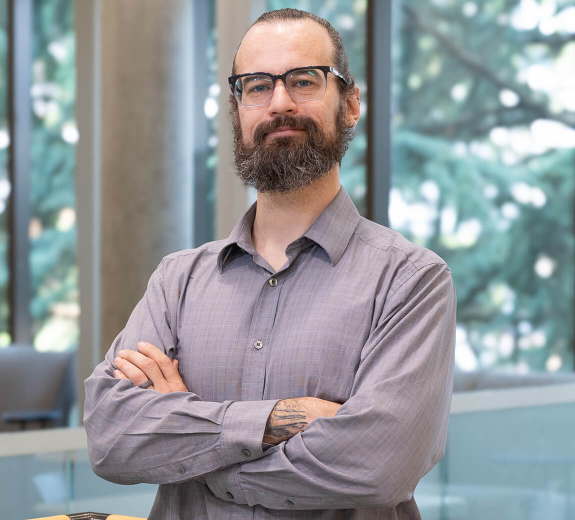
Peter Morawski
Peter Morawski, PhD

Tell us more about your project. What are you hoping to learn?

Dr. Morawski: We want to better understand disease-related cells in scleroderma. We study cells from people with scleroderma through skin punch biopsies, which are tiny samples of tissue about the size of a pencil eraser. Because the samples are very small, there are only so many cells we can extract. That’s why getting as much information out of those cells as possible is crucial.

Our hope is to use this tool to examine both what the cells are doing now, and what they are preparing to do. Our hypothesis is that scleroderma has a “pre-disease” state, where cells aren’t yet causing disease, but they’re “on deck” to do so. ISSAAC-seq will help us determine what that pre-disease state looks like and potentially how to use that information to inform new therapies.

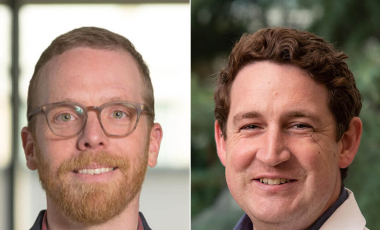
Mishra Arpit
Arpit Mishra, PhD

Tell us more about ISSAAC-seq.

Dr. Mishra: Most approaches isolate the cells first and then run the chemistry on that tiny sample. At very low cell numbers, the reaction has to be re-tuned for every sample, more cells die, and the data gets noisy. ISSAAC-seq flips the order. We label the cells, gently preserve them, and tag their genetic material while they’re still in a larger pool. Then our flow cytometry core sorts out the rare population we care about. Low cell numbers stop being a problem.

ISSAAC-seq lets us read two kinds of information from the same cell:

  • Gene expression, which tells you which genes a cell is using right now.
  • Chromatin accessibility, which shows which parts of the DNA are open and ready to be used. It hints at what the cell is preparing to do next.

By connecting those two layers, we hope to learn:

  • When cells start shifting toward disease.
  • Which molecular changes drive that shift.
  • Whether those changes can be altered to prevent or slow disease.

Innovation Fund grants bring together scientists with different expertise. How do you collaborate?

Dr. Morawski: As we started to crack the code of early scleroderma progression, it became clear we needed to do more in-depth studies genetic studies, using very few cells. And everyone at BRI knows that Arpit (Mishra) is the guy you go to when you have an idea and need to figure out how do I actually do this? He brings technical expertise that opens the door to answering crucial questions.

Where else might this tool be used at BRI?

Dr. Mishra: This tool could be used across BRI to study many different autoimmune diseases. I’m interested in using it to see if we can predict multiple sclerosis (MS) relapses. I’d like to compare cells from people with MS during both relapses and remission and see if we can identify early changes that may signal the beginning of a relapse. This could help doctors recognize a relapse earlier and intervene sooner, which could spare patients a lot of suffering.

Why is philanthropy for this work important?

Dr. Morawski: Building tools is a critical component of science, and philanthropy helps us get those tools up and running. Without philanthropic dollars to fuel tools and technologies, bigger dreams and bigger innovations can’t happen. Tools are the key to unlocking discoveries, to advancing clinical therapies. Without them, we can’t get to the heart of what actually drives disease. We’re so grateful for all the donors who support the Innovation Fund at BRI.

Learn more

Read about other Innovation Fund projects:

Consider making a donation to support BRI’s Innovation Fund.

Immuno-what? Hear the latest from BRI

Keep up to date on our latest research, new clinical trials and exciting publications.