
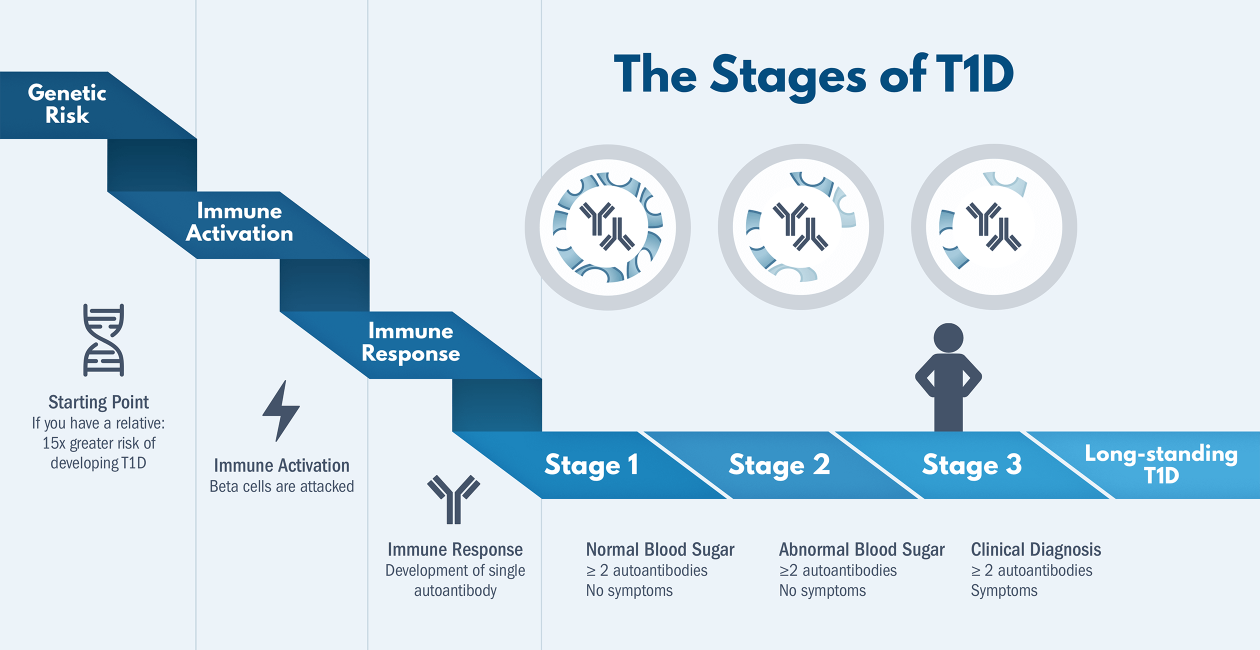
Type 1 Diabetes TrialNet has enrolled people at risk for type 1 diabetes (T1D) for more than 20 years, collecting longitudinal clinical data and biospecimens as participants progress toward clinical diagnosis. The resulting dataset enables researchers to investigate disease progression among people at risk for T1D.
For example, Dr. Speake’s group identified a subset of participants who lose autoantibodies, transitioning from multiple-autoantibody-positive high-risk status to a lower single- or zero-autoantibody status. This transition was associated with a reduced risk of clinical diagnosis. The team is now investigating the immunological mechanisms that may explain these changes. She is also a Co-PI with Dr. Dirk Homann on a project looking for markers of rapid disease progression that can be measured in the serum, using TrialNet samples and data.
With a therapy now available to delay the onset of T1D, an important priority is integrating autoantibody screening and glucose monitoring into routine health care settings. An important goal of monitoring is to reduce diabetic ketoacidosis (DKA), a life-threatening complication that occurs less frequently among people participating in research studies. To accomplish this, participants are typically evaluated every six months for changes in glucose tolerance. Using TrialNet data and novel statistical modeling approaches, Dr. Speake and her colleagues in CII demonstrated that less frequent glucose monitoring could maintain similar protection against DKA.
Additional Research Projects
Evaluating Therapies for Type 1 Diabetes
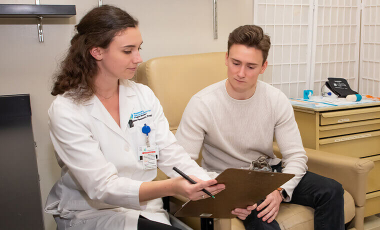
The Center for Interventional Immunology, directed by Dr. Speake, collaborates with biotechnology and pharmaceutical partners to evaluate promising therapies designed to prevent, delay or treat type 1 diabetes.
Experimental Medicine Studies in Type 1 Diabetes
Dr. Speake leads BRI’s Experimental Medicine Unit, which seeks to understand how emerging therapies influence the immune and metabolic pathways involved in type 1 diabetes.
The Sound Life Project
The Sound Life Project studies healthy immune systems to better understand why individuals respond differently to infections, vaccinations, and other immune challenges.