
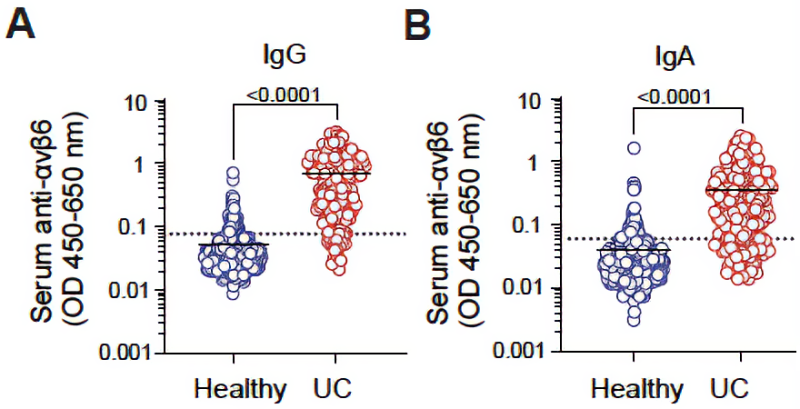
Autoantibodies have emerged as an important feature of ulcerative colitis and can target proteins involved in regulating inflammation in the colon. The J. Lord Lab is investigating how these autoantibodies develop and how they may contribute to disease.
To investigate one potential mechanism, researchers are studying an autoantibody that targets the integrin alpha-v beta-6. They are examining how this autoantibody prevents epithelial cells in the colon from activating transforming growth factor beta, an immune-regulating protein, and how this affects epithelial cell function.
The lab is also examining T cells that recognize peptides from the proteins that form the alpha-v beta-6 autoantigen. Researchers are investigating how these T cells may support the B cells that produce autoantibodies, providing insight into how the autoimmune response develops and is maintained.
A broader effort seeks to identify additional autoantibodies in inflammatory bowel disease and determine their potential roles in disease. Together, these studies aim to clarify how antibody-mediated immune responses contribute to intestinal inflammation and identify immune mechanisms that could ultimately advance understanding of inflammatory bowel disease and inform its treatment.
Additional Research Projects
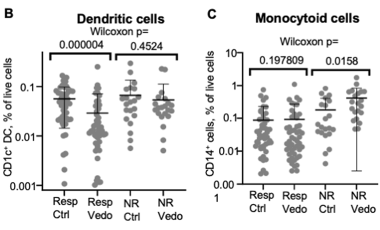
Understanding Immune Responses to Vedolizumab in Inflammatory Bowel Disease
The J. Lord Lab studies how vedolizumab, a therapy for inflammatory bowel disease, affects immune cells in the blood and intestinal tissue to better understand treatment response and identify potential biomarkers.
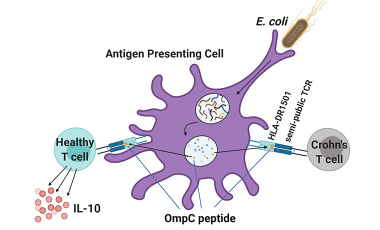
Understanding T Cell Responses in Inflammatory Bowel Disease
The J. Lord Lab studies how T cells in the blood and intestinal tissue respond to gut bacteria and how differences in these responses may contribute to inflammatory bowel disease.