Scleroderma is an autoimmune disease characterized by fibrosis, or the buildup of scar-like tissue, that affects the skin and can also involve other organs. T cells are thought to contribute to this process through their interactions with structural cells of the skin, including fibroblasts and keratinocytes. However, important questions remain about which cell populations interact in affected tissue and how those interactions contribute to disease.
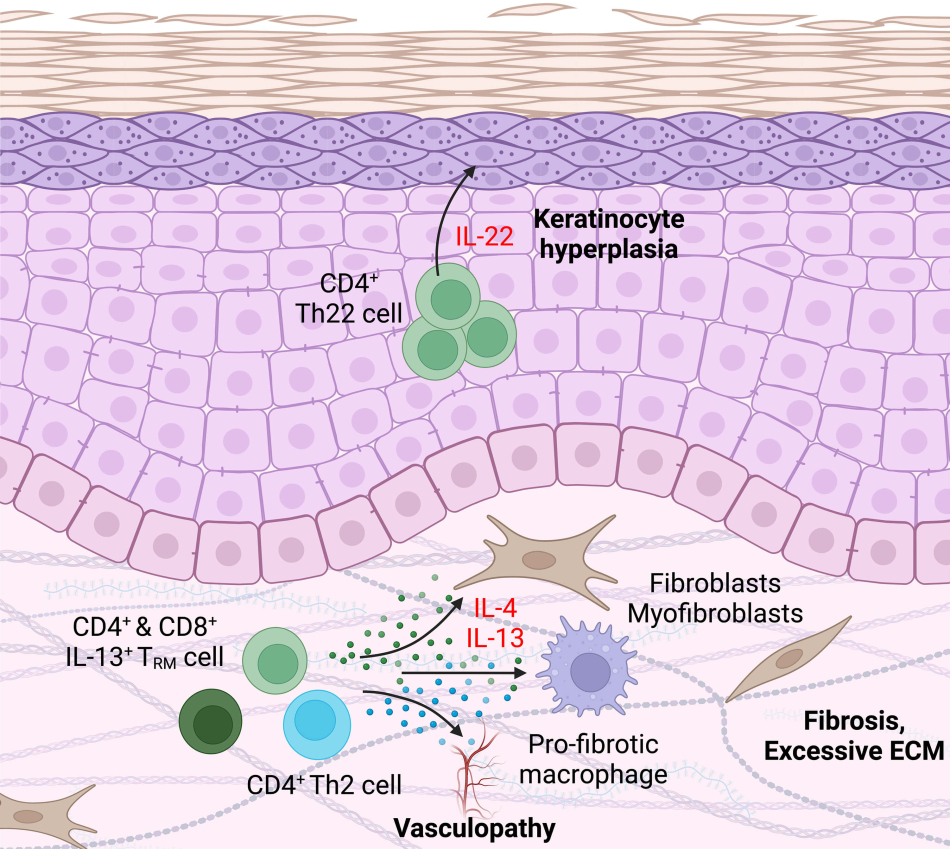
The Morawski Lab is investigating how T cells influence fibroblast function in scleroderma. Researchers are examining which disease-associated T cell and fibroblast populations interact within the skin and how cytokines produced by T cells, including interleukin-4 and interleukin-13, affect the activity of fibroblasts.
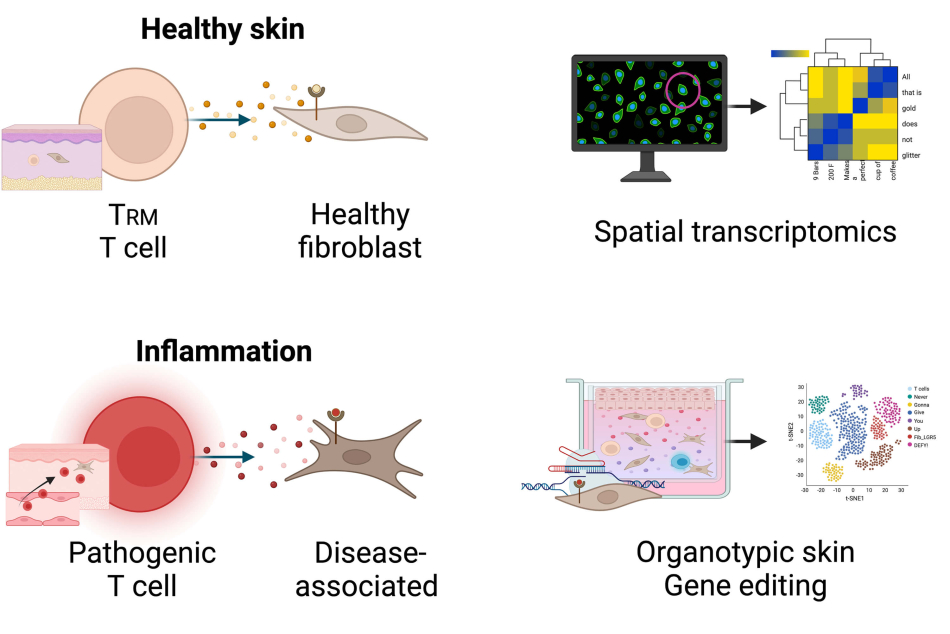
Another focus is how these interactions differ between healthy skin and scleroderma. In healthy tissue, resident-memory T cells may help support the stability and normal function of fibroblast populations. During disease, altered T cell signaling may disrupt this balance and contribute to fibrosis and tissue damage.
Using approaches including spatial genomics, three-dimensional skin culture models, and gene editing, researchers aim to define the cellular and molecular interactions that drive these changes. A better understanding of how T cells and structural cells communicate could reveal biological mechanisms that contribute to scleroderma and identify potential targets for future therapies.