
Acute respiratory distress syndrome (ARDS) is a life-threatening condition in which severe inflammation damages the lungs, making it difficult for oxygen to reach the bloodstream. Although the immune system is essential for fighting infection and repairing injured tissue, excessive or poorly regulated immune responses can worsen lung damage and delay recovery.
One way the immune system controls inflammation is through “immune checkpoint” pathways, which act as natural brakes to help prevent immune responses from becoming too strong. One of the best-characterized immune checkpoint pathways involves the receptor programmed cell death protein 1 (PD-1) and its binding partner, programmed death-ligand 1 (PD-L1). When PD-1 and PD-L1 interact, they help regulate T cell activity and limit excessive inflammation.
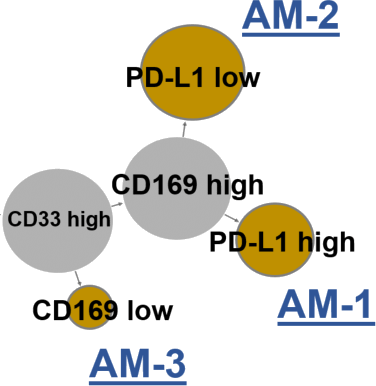
Researchers in the Mikacenic Lab have found that people with ARDS who require prolonged mechanical ventilation have lower levels of PD-L1 on alveolar macrophages, suggesting this protective pathway may be disrupted during severe lung injury. The lab is investigating how changes in PD-L1 influence macrophage function and communication with T cells using bronchoalveolar lavage samples from people with ARDS. By understanding how immune checkpoint pathways regulate inflammation in the lungs, researchers hope to identify new mechanisms that contribute to lung injury and recovery.
Additional Research Projects
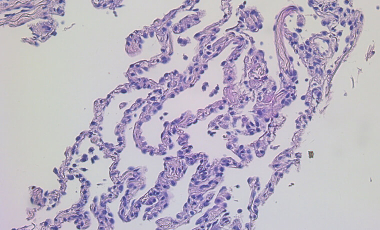
Macrophage Diversity in Lung Inflammation and Fibrosis
The Mikacenic Lab studies how different populations of lung macrophages contribute to inflammation, tissue repair, and fibrosis.
Immune Responses to Respiratory Viral Infections in Rheumatoid Arthritis
The Mikacenic Lab studies why respiratory viral infections affect people with rheumatoid arthritis differently than healthy adults.