


“Participating in research came down to something simple: If I can give blood to help others, why wouldn’t I? People face challenges every day, and our ability to help only goes so far. Donating blood is something simple I can do to support meaningful discoveries that will improve the lives of others. If someone is considering getting involved, I’d tell them: It doesn’t take much time, but it can make a huge difference. So many of us want to contribute to meaningful change and this is a concrete way to do it.”
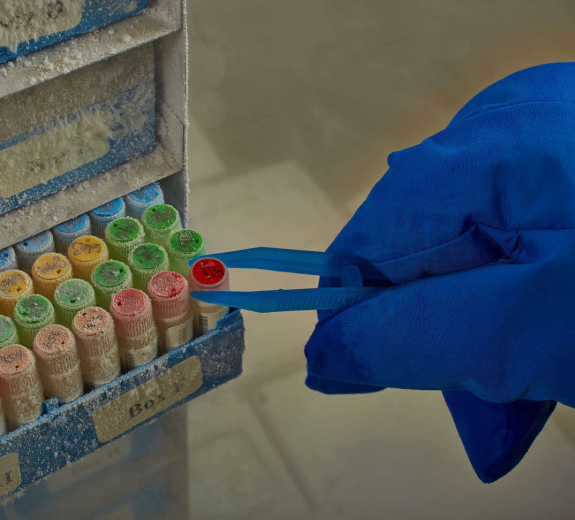
Behind BRI's Biorepositories: How They Started and Continue to Fuel Discoveries
It’s 2003. “Finding Nemo” hits theaters. iTunes launches. The human genome is sequenced for the first time. And a team of BRI leaders comes together with a bold question: How do we get to the root of immune system diseases and turn that knowledge into patient care?
“Our goal was to understand human diseases, particularly autoimmune diseases,” said BRI President Jane Buckner, MD. “We needed to connect what we learned in the lab with how to help patients in the clinic. A bank of blood and tissue samples (biorepository) could be that bridge.”
“We needed to connect what we learned in the lab with how to help patients in the clinic.”
Jane Buckner, MD
That idea was transformative. Biorepositories would allow researchers to study the cells and processes driving disease in people and identify new ways to intervene.
Every Monday, Dr. Buckner, Carla Greenbaum, MD, and Jerry Nepom, MD, PhD, met to figure out exactly how to build biorepositories. By 2004, using biorepositories to fuel translational research was baked into BRI’s strategic plan.
“Ever since, the biorepositories have been a defining resource for BRI,” Dr. Greenbaum said. “They have been key to our success and far exceeded our expectations.”
Laying the groundwork
To make this vision a reality, the team built a standard process, allowing scientists to compare findings across diseases and work together instead of in separate silos. It included steps to collect samples in the same way so they could be reliably compared; invite participants to donate multiple times, so researchers could study changes over time; and keep samples ready to use with patient permission, so scientists can answer questions promptly and run quick, practical studies before investing significant time and money.
“Our method makes it easier for BRI scientists and collaborators to access samples,” Dr. Greenbaum said. “It’s one reason BRI is so successful in translational research and why people love to work here.”
BRI put this process into action with our first two biorepositories: Type 1 Diabetes (T1D) and Healthy Control.
Storing tissue samples
Another challenge came years later: Storing tissue samples. James Lord, MD, PhD, knew researchers could learn more about inflammatory bowel disease by studying the tissues where the disease happens. It’s fairly easy to donate tissue samples from biopsies during colonoscopies. The challenge was preserving those samples for research.
“We learned many ways how not to cryopreserve the human intestine,” Dr. Lord said.
Dr. Lord and colleagues modified their method until they had an affordable and reliable way to store samples. Now, this method serves as the basis for other biorepositories and is used in international clinical trials.
Fueling breakthroughs
BRI’s biorepositories have fueled countless discoveries — like understanding the role of regulatory T cells (Tregs) in T1D.
Dr. Buckner’s team set out to learn why Tregs weren’t slowing down effector T cells (cells that attack in T1D). But samples from people with T1D surprised them: Tregs were working properly, but effector T cells were ignoring them.
“It completely changed our understanding of T1D,” Dr. Buckner said.
The biorepository also fueled crucial insights in ulcerative colitis (UC). By 2024, Dr. Lord had spent over 20 years recruiting participants for BRI’s Gastrointestinal Disease Biorepository. So, when Adam Lacy-Hulbert, PhD, read about a biomarker that showed up in people with UC up to 10 years before diagnosis, he ran down the hall to tell Dr. Lord. Soon, they were examining samples, searching for the same biomarker — and they found it.
“Biorepository samples enabled them to do this in weeks instead of months or years,” Dr. Buckner said. “We hope to extend this work to develop ways to predict and prevent UC.”
Biorepositories By The Numbers
330,000+
total samples
16,500+
active participants
2,000+
samples distributed annually to external collaborators
Donors Make Repositories Possible
The people at the heart of breakthroughs
Each biorepository donation is like an acorn — the beginning of something with a lasting impact. As it grows, it becomes part of a larger, deeply rooted system that supports research and discovery. Like an oak tree that continues to grow, biorepositories serve as a lasting resource that fuels scientific discovery.

Austin Cresap, Sound Life Project participant
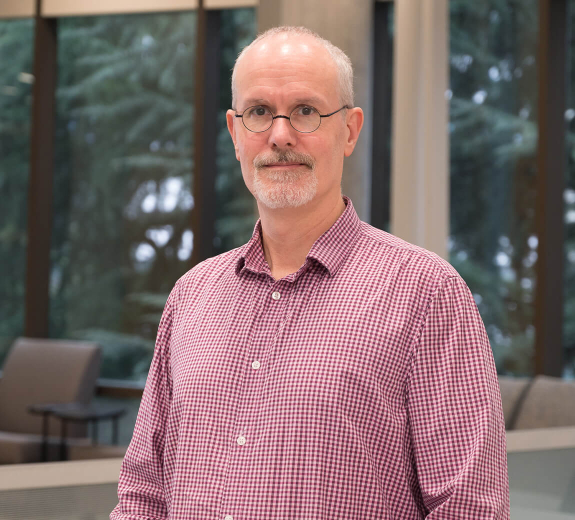
James Lord, MD, PhD
“I used to feel hesitant about asking patients to participate in research. Then there was a couple who thanked me for asking. They said they didn’t have enough money to make a financial contribution, so they were happy to support in a way that was personal and priceless. Now, I feel guilty if I don’t ask a patient to donate. When I look at the biorepository, I see a community of people who quite literally gave of themselves to improve future care — and I’d like to say thank you.”
Philanthropy fuels life-changing research
Donors and foundations are critical to creating and maintaining BRI’s biorepositories because government grants don’t typically cover the costs of research resources like biorepositories. Over the years, many partners have supported this work, including:
- Washington Research Foundation
- Breakthrough T1D (formerly JDRF)
- Fund for Science and Technology
- Crohn’s & Colitis Foundation
You Might Also Like
Discover more blog posts related to this topic.
Innovation Fund Spotlight: Pioneering a New Generation of Tetramers
In the late 1990s, Bill Kwok, PhD, pioneered MHC class II tetramers, a game-changing tool in immunology research. Tetramers have fueled countless research breakthroughs because they enable scientists to find extremely rare cells and extract them to study in precise detail.
Eddie Irvine, PhD, Uses Engineering and AI to Explore Big Questions in Immunology
Eddie Irvine, PhD, recently joined BRI as a Principal Investigator in the Center for Systems Immunology. He’ll use his unique background in protein engineering and AI to better understand the immune system and find new ways to treat disease.
New Technology Opens the Door to Understanding the Earliest Stages of T1D
Eddie James, PhD, earned a new grant to explore early cell changes that lead to T1D, using a new tool pioneered at BRI.
Immuno-what? Hear the latest from BRI
Keep up to date on our latest research, new clinical trials and exciting publications.