
Zoonotic transfer of viruses from animals-to-humans is a primary cause of emerging infectious disease threats globally. Yet viruses cross species barriers in both directions, and human-to-animal transmission – so called “reverse zoonoses” – represent an underappreciated public health threat. These events can establish new animal reservoirs where viruses continue to replicate, evolve and potentially spill back into humans.
Some of these reservoirs are well-documented, like the large outbreaks in farmed mink and white-tailed deer. Others may form silently, in poorly surveyed species. Over time, a cryptic reservoir can generate highly mutated variants that, upon re-entry into the human population, circumvent existing immunity. Thus, understanding viral host range is critical to anticipating viral evolution and future outbreaks.
Host range is in part determined by the molecular compatibility between a viral protein and a receptor on the surface of host cells. For SARS-CoV-2, infection begins when the spike protein binds ACE2, so differences in ACE2 across species influence which animals the virus can infect. Yet determining this across the enormous diversity of animal life remains difficult. Experimental approaches are retrospective and rely on brute-force testing in a small number of animal models, while computational approaches are rarely grounded in experimental data.
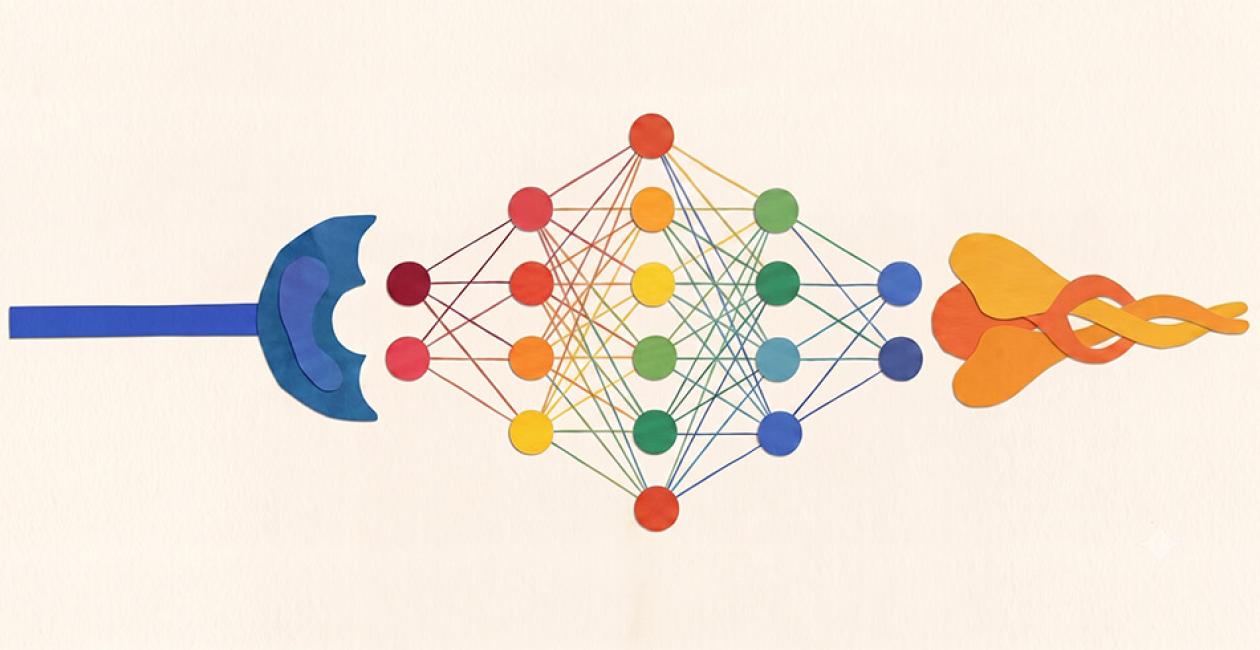
To bridge this gap, we developed a platform that combines high-throughput experimental screening with artificial intelligence (AI). We screened a large library of SARS-CoV-2 receptor-binding domain variants against ACE2 proteins from diverse animal species and sequenced the resulting binding and non-binding populations, generating millions of measurements of virus-receptor compatibility.
We then used these data to train a transformer-based AI model that predicts compatibility between SARS-CoV-2 and animal ACE2 receptors directly from sequence, including for species never encountered during training. Each prediction is paired with an uncertainty estimate, allowing hundreds of candidate species to be triaged by both predicted RBD:ACE2 compatibility and the reliability of that prediction.
This platform provides a foundation for an AI-assisted early warning system for animal reservoirs that may drive future waves of SARS-CoV-2 infection. More broadly, the same strategy could be extended to other viral families and host receptors, transforming how we predict and respond to emerging viral threats.