


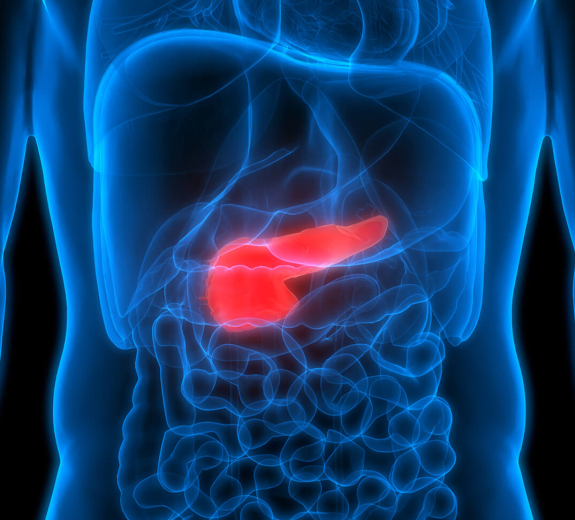
VMFH, BRI Bring Innovative Pancreas Cancer Trial to Pacific Northwest
In 30 years of caring for people with pancreas cancer, Vincent Picozzi, MD, hasn’t seen much improvement in treatment or outcomes. That may be changing thanks to an investigational new therapy called daraxonrasib, which targets the gene change that drives the vast majority of pancreas cancers.
A recent study examined the therapy in patients with advanced pancreas cancer that progressed despite treatment with standard therapies. People who received daraxonrasib lived a median of 13.2 months, compared with 6.6 months for those who received chemotherapy.
While daraxonrasib effectively doubled patient survival, an additional six or seven months is still not enough. But it’s progress for a cancer that remains one of the toughest to treat. Now, a new clinical trial examining this therapy for newly diagnosed patients is open at Virginia Mason Franciscan Health (VMFH) in partnership with BRI.
“A drug that targets the genetic mutations driving most pancreas cancers is something we’ve been hoping for for a very long time,” Dr. Picozzi said. “It holds the potential of helping more people in much bigger ways.”
Targeting the on/off switch for pancreas cell growth
In the 1980s, scientists discovered that more than 90% of pancreas cancers are driven by mutations (changes) in a gene called KRAS, which acts like an on/off switch for cell growth. Researchers spent decades trying to develop drugs that could turn that switch off.
"Targeting the KRAS mutation has been the holy grail of pancreas cancer research for as long as I've been in the field," Dr. Picozzi said. "A key breakthrough a few years ago led to the development of KRAS inhibitors — drugs that essentially turn off the cell growth switch."
Daraxonrasib is the first of those drugs. Dr. Picozzi is excited to offer this therapy at VMFH and optimistic that it may yield even better outcomes if people receive it earlier in their treatment. The study will compare three approaches: daraxonrasib alone, chemotherapy alone and the two treatments together to determine which approach is most effective.
“This may be the most significant trial for pancreas cancer in the next decade, defining how we treat the disease moving forward,” Dr. Picozzi said. “It's tremendously gratifying to be one of the sites leading this effort and it wouldn’t be possible without BRI’s Clinical Research Team.”
Advancing the future of care
BRI and VMMC have been longstanding partners in clinical research. BRI’s Clinical Research Program does the behind-the-scenes work that helps bring more than 400 studies to VMMC patients, advancing the next generation of treatments and care.
With the daraxonrasib clinical trial and other promising advances underway, Dr. Picozzi sees growing momentum in progress against pancreas cancer.
"This advance will be a rising tide that lifts all boats,” Dr. Picozzi said. “It will encourage more research, more investment and more innovation. The future is brighter than ever before."
You Might Also Like
How Does Wildfire Smoke Impact the Immune System?
As wildfire smoke becomes more common in the Pacific Northwest, BRI scientists are learning more about how it influences immune system function. We asked Dr. Megan Smithmyer about her research in this area and a new study examining the immune systems of wildland firefighters.
A Decades-Long Dream Becomes Reality
Learn how research led by Jane Buckner, MD, is bringing regulatory T cell-based therapies closer to clinical trials.
Innovation Fund Backs Exciting New Research
Allyson Byrd, PhD, and Cate Speake, PhD, are exploring an innovative tool in immunology research. The questions they can ask are limitless.
Immuno-what? Hear the latest from BRI
Keep up to date on our latest research, new clinical trials and exciting publications.