Changing our understanding of the immune system
Drs. Ziegler, Ramsdell and Bronkow found the exact location of the mutated gene on the X chromosome before Dr. Ziegler left the startup and joined BRI. Then Drs. Ramsdell and Bronkow successfully cloned the gene (now called FOXP3) to study it further.
More critical findings came in the following years: Hans Ochs, MD, at Seattle Children’s identified a similar mutation in FOXP3 in IPEX syndrome, a rare syndrome that happens when the immune system spirals out of control.
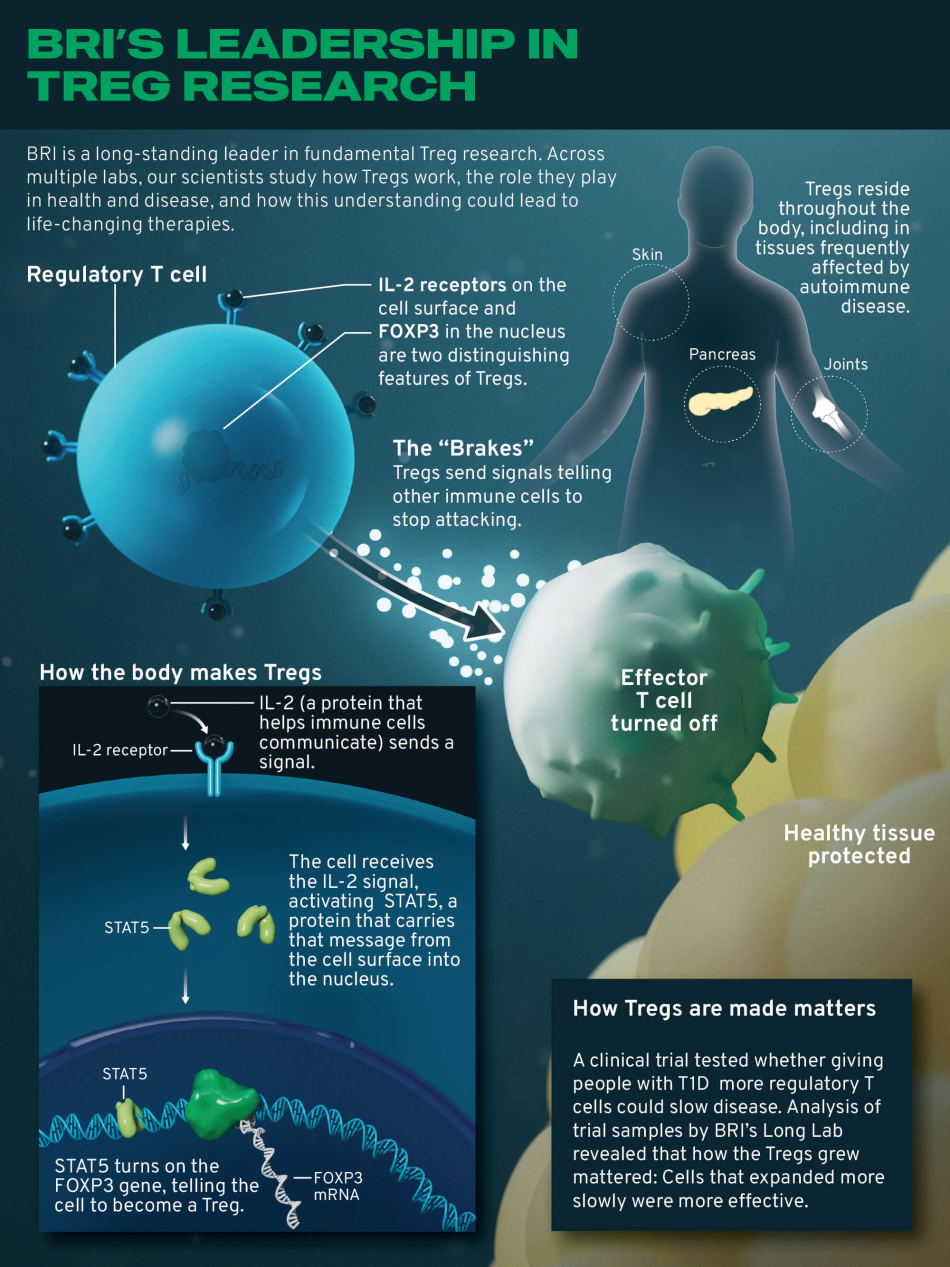
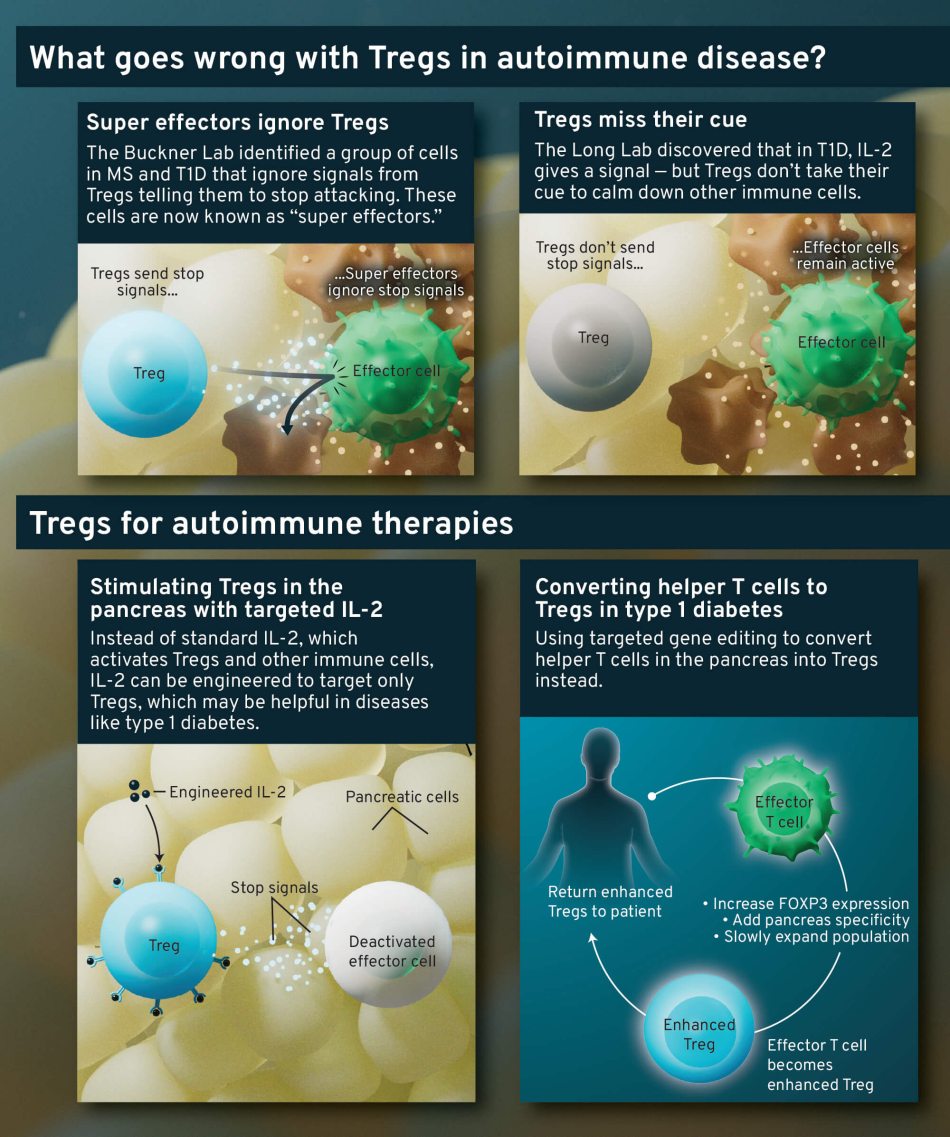
Meanwhile in Japan, Shimon Sakaguchi, PhD, identified a molecule on the surface of certain T cells that could be used as a marker for “suppressor” T cells. This marker gave researchers a clear way to define regulatory T cells (Tregs) and separate them from other T cells. He later showed that in autoimmune disease models, Tregs could help prevent disease from starting. Together, these studies provided early evidence that a specific group of T cells can control and regulate immune responses.
Until then, scientists believed that immune tolerance — knowing to attack germs and leaving healthy tissue alone — was learned in the thymus, a small organ in the chest. The idea was that once the thymus trained immune cells early in life, they remained relatively fixed and unchanging.
Discovering FOXP3 revealed that while the thymus does educate immune cells, it's not the whole story. It taught scientists that tolerance is not static or permanent. Instead, Tregs can change the immune system throughout our lives.
“Learning that the immune system can be changed was revolutionary,” Dr. Ziegler said. “It opened the door to understanding exactly how Tregs work, and exploring if and how we can manipulate the immune system to fight disease.”