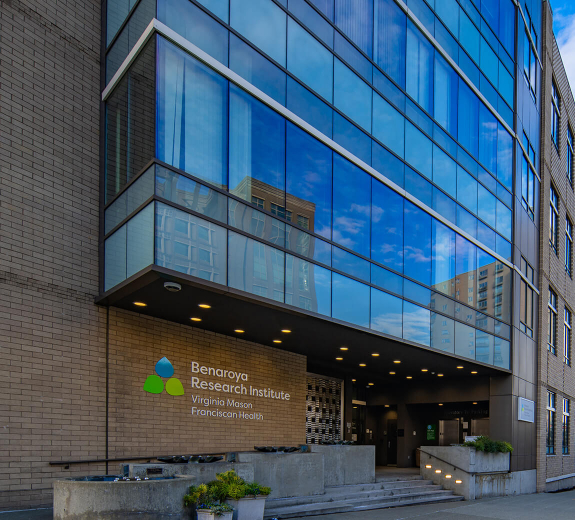
GNTI 122 brings together three key technological pillars in a single engineered cell therapy, assembled through close collaboration across the three organizations. The foundational discovery for the clinical stage product originated from the Rawlings Lab at Seattle Children’s Research Institute and established methods to generate stable regulatory T cells from bulk CD4 T cells by enforcing expression of the FOXP3 transcription factor, effectively programming the cells with a regulatory identity. The Rawlings Lab also developed the chemically inducible signaling complex (CISC), an engineered module that delivers a targeted IL 2 pathway signal; a critical requirement for regulatory T cell survival and persistence after infusion. BRI leveraged its expertise in identifying human T cell receptors (TCR) to develop a cell product targeting pancreatic islets, selecting a naturally occurring TCR that recognizes a T1D-relevant islet antigen and directs GNTI-122 cells to the pancreas. To establish human proof of principle, the Buckner Lab also developed and applied polyclonal suppression assays using effector T cells derived from people with T1D, demonstrating that GNTI 122 cells could suppress pathogenic immune responses in a disease relevant, patient cell-based system.
About GNTI-122 and EngTreg Therapy
GNTI-122 is a novel, single-treatment, autologous engineered regulatory T cell (EngTreg) investigational therapy designed to restore immune tolerance by selectively suppressing autoreactive immune responses that drive type 1 diabetes. GNTI-122 cells are designed to migrate to the pancreas and associated lymphoid tissues and remain there to stably mitigate the immune response, preserving endogenous insulin production. GentiBio’s EngTreg platform builds on foundational discoveries in Treg biology, recognized by the 2025 Nobel Prize in Physiology or Medicine, and is designed to deliver targeted, durable immunomodulation with the goal of addressing the root cause of autoimmune disease.
About the POLARIS Study
Phase 1, Single Dose, Open-LAbel Study of GNTI-122 in Adults with Recently dIagnoSed Type 1 Diabetes (T1D) [POLARIS (NCT06919354)] is a clinical trial enrolling adults aged 18–45 years within 120 days of T1D diagnosis. The study evaluates the safety and tolerability of escalating doses of GNTI-122 and includes secondary and exploratory assessments of pharmacodynamic activity and clinical biomarkers, including measures of beta cell function. Participants are followed for up to 78 weeks. For more information, visit polarisstudy.com or ClinicalTrials.gov.
About GentiBio
GentiBio is a biotechnology company developing engineered regulatory T cell (EngTreg) therapies to restore immune tolerance and transform the treatment of autoimmune and inflammatory diseases. GentiBio’s EngTregs harness the underlying power of Tregs and are engineered for precision, durability, and scalable manufacture. GentiBio seeks to deliver disease modifying, and potentially curative, therapies for patients with significant unmet need. Learn more at www.gentibio.com.
Contact
Media email: Hatem.Heikal@gentibio.com
Clinical Email: Clinical_Ops@gentibio.com
About Seattle Children’s
Seattle Children’s mission is to provide hope, care and cures to help every child live the healthiest and most fulfilling life possible. Together, Seattle Children’s Hospital, Research Institute and Foundation deliver superior patient care, identify new discoveries and treatments through pediatric research, and raise funds to create better futures for patients. Ranked as one of the top children’s hospitals in the country by U.S. News & World Report, Seattle Children’s serves as the pediatric and adolescent academic medical center for Washington, Alaska, Montana and Idaho – the largest region of any children’s hospital in the country. As one of the nation’s top five pediatric research centers, Seattle Children’s Research Institute is internationally recognized for its work in neurosciences, immunology, cancer, infectious disease, injury prevention and much more. Seattle Children’s Foundation, along with Seattle Children’s Guild Association – the largest all-volunteer fundraising network for any hospital in the country – works with our generous community to raise funds for lifesaving care and research.
For more information, visit seattlechildrens.org; follow them on X, Facebook, LinkedIn and Instagram; or subscribe to their Healthy Tides newsletter.